What is an API?
API is the acronym for Application Programming Interface, which is a software intermediary that allows two applications to talk to each other. Each time you use an app like Facebook, send an instant message, or check the weather on your phone, you’re using an API.
What Is an Example of an API?
When you use an application on your mobile phone, the application connects to the Internet and sends data to a server. The server then retrieves that data, interprets it, performs the necessary actions and sends it back to your phone.
The application then interprets that data and presents you with the information you wanted in a readable way. This is what an API is – all of this happens via API. More Mulesoft Online Training
To explain this better, let us take a familiar example.
Imagine you’re sitting at a table in a restaurant with a menu of choices to order from. The kitchen is the part of the “system” that will prepare your order. What is missing is the critical link to communicate your order to the kitchen and deliver your food back to your table. That’s where the waiter or API comes in. The waiter is the messenger – or API – that takes your request or order and tells the kitchen – the system – what to do. Then the waiter delivers the response back to you; in this case, it is the food.
What is API management?
API management is the process of designing, publishing, documenting and analyzing APIs in a secure environment. Through an API management solution, an organization can guarantee that both the public and internal APIs they create are consumable and secure. More skills from Mulesoft Training
API management solutions in the market can offer a variety of features; however, the majority of API management solutions allow users to perform the following tasks:
- API design – API management solutions provide users – from developers to partners – the ability to design, publish and deploy APIs as well as record documentation, security policies, descriptions, usage limits, runtime capabilities and other relevant information.
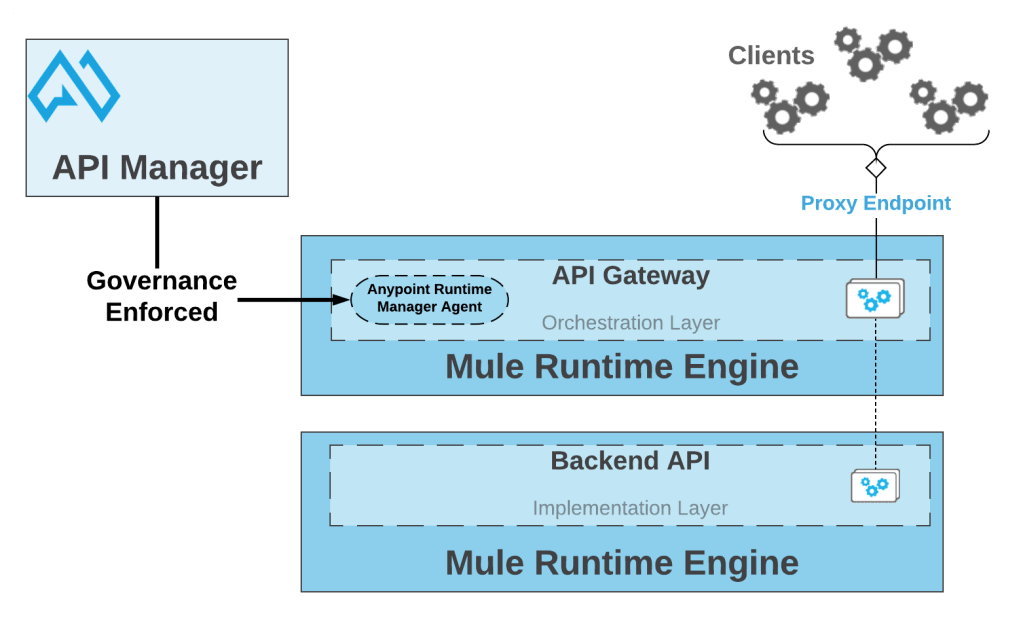
- API gateway – API management solutions also serve as an API gateway, which acts as a gatekeeper for all APIs by enforcing relevant API security policies and requests and also guarantees authorization and security.
- API store – API management solutions provide users with the ability to keep their APIs in a store or catalog where they can expose them to internal and/or external stakeholders. This API “store” then serves as a marketplace for APIs, where users can subscribe to APIs, obtain support from users and the community and so on.
- API analytics – API management allow users to monitor API usage, load, transaction logs, historical data and other metrics that better inform the status as well as the success of the APIs available. Get More skills from Mule Training
Ensure every API is secure and governed
With just a few simple steps, secure APIs with policies, manage client access, group APIs as products, and monitor and analyze traffic. No matter where your APIs and microservices are hosted and which technologies they run on, you can manage them all from one place.
- Unlock applications, data, and microservices with an API gateway
- Apply prebuilt or custom security policies at runtime with no downtime
- Proxy existing SOAP services or create new APIs from OAS and RAML definitions
- Provision access across individual clients or entire teams with OAuth and SAML
- Use a service mesh to secure and govern microservices — regardless of where they’re hosted
- Gain insight into the performance of APIs, track usage, and identify errors
For more in-depth knowledge, enroll for live free demo on MuleSoft Certification
 Mulesoft Online Learning